


New Integration: Connect Observium to All Quiet
All Quiet now integrates with Observium. You can forward network alerts directly to your on-call teams using a lightweight alert transport script and inbound webhooks.
Published: Monday, 27 April 2026
All Quiet now integrates with Observium. You can forward network alerts directly to your on-call teams using a lightweight alert transport script and inbound webhooks. This integration helps you centralize network monitoring and reduce MTTR through automated incident workflows.
How the Integration Works
All Quiet processes Observium alert statuses to manage the incident lifecycle automatically. This ensures your team only sees actionable alerts.
- Incident Creation: All Quiet opens or updates incidents when
alert_status = 0. - Auto-Resolution: All Quiet resolves incidents when
alert_status = 1. - Noise Reduction: The integration ignores delayed (2) and suppressed (3) alerts to prevent unnecessary on-call notifications.
Data Mapping and De-duplication
To maintain a clean incident feed, All Quiet uses specific logic to group related alerts and provide full context to responders.
| Feature | Description |
|---|---|
| De-duplication | Correlates alerts based on alert_id and entity_id to prevent duplicate incidents. |
| Alert Context | Includes severity, alert conditions, metrics, and entity types. |
| Visibility | Generates a readable title using device_hostname and the alert message. |
| Deep Linking | Provides a direct link back to the Observium console for rapid investigation. |
Key Benefits for Incident Management
- Reliability: Automated syncing ensures your status pages reflect real-time network health.
- Efficiency: Responders receive all necessary metrics within the All Quiet app, reducing the need to context-switch.
- Focus: Advanced filtering stops suppressed alerts from waking up your teams.
Learn more: https://docs.allquiet.app/integrations/inbound/observium
Pro Tip: Use this integration to bridge the gap between your network operations and your developer teams for faster cross-functional incident response.
More updates
-
Public API Endpoints for Audit Log Export
We updated our Public API to include audit logs for both EU and US regions. This update allows teams to automate security workflows and programmatically manage compliance data.
-
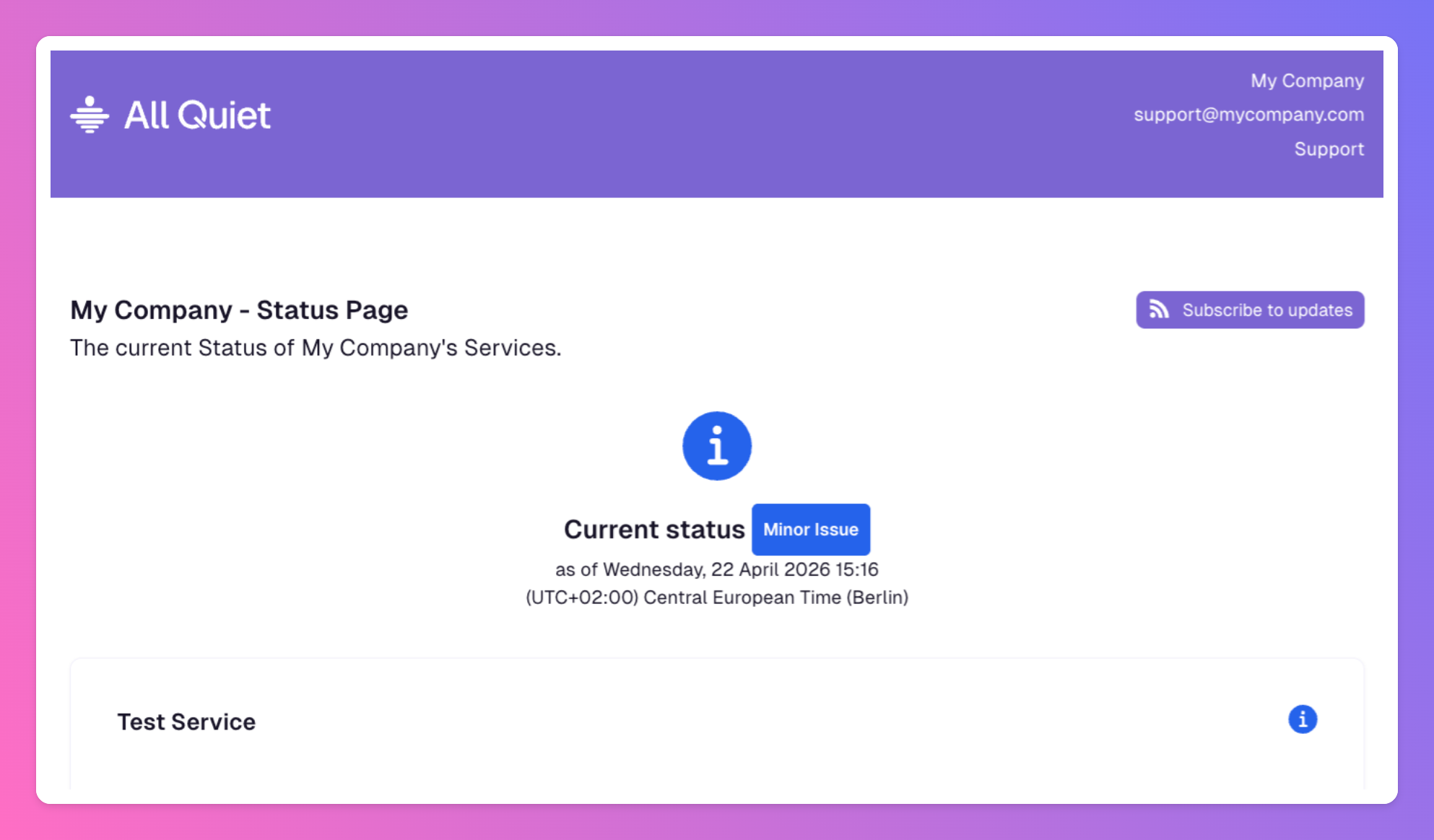
Additional New Privacy Controls for Status Pages
We updated All Quiet to give you precise control over your incident communication. You can now customize how much data your status pages reveal to the public or internal stakeholders.
Published