


Perspectives
SaaS is dead, long live SaaS: While vibe-coding does favor build over buy for some products, it won't replace mission-critical tools in the foreseeable future
Here’s my take on what gets killed, what survives, and the build-vs-buy rule that actually works.

By Peer Rahne · Co-Founder & CEO at All Quiet
Updated: Wednesday, April 29, 2026
Published: Wednesday, April 29, 2026
I believe that AI does not kill SaaS. It eliminates the “thin wrapper”: software that offers little more than a polished UI for simple automations. Today, any developer can stitch these tools together in an afternoon.
Still, SaaS is not disappearing; it is evolving. While products that sell mere convenience will face extinction, products that sell reliable outcomes for high-stakes problems will thrive. This guide covers what survives the shift toward vibe-coding and how to decide whether to build or buy.
The New Baseline: When "Good Enough" Becomes Free
Vibe-coding is great: It allows us to ship functional software at unprecedented speeds. Large Language Models (LLMs) now draft code, connect APIs, and generate UI scaffolding automatically.
We can see that this shift raises the bar for SaaS vendors. When basic functionality is cheap, the value of a paid tool must come from reliability, compliance, and long-term maintenance. High prices do not just signal quality. They create a financial incentive for teams to build their own "80% solution." Just look at the stock price of tools like PagerDuty or Hubspot or other SaaS giants that have seen their stock prices drop significantly.
SaaS Categories Facing Extinction
That said, I think vulnerable SaaS categories share three traits: a narrowly defined job-to-be-done, low failure costs, and easily verifiable outputs. Good examples are:
- Workflow Wrappers: Basic CRUD (Create, Read, Update, Delete) tools for internal approvals or team dashboards.
- Low-Stakes Content: Tools for text summarization, formatting, or template generation.
- Basic Analytics: Simple data visualization layers that sit on top of a data warehouse.
So, how do SaaS players stay relevant? They need to be outstanding in the categories that are not vulnerable to vibe-coding.
The Survivors: Infrastructure You Trust
Based on the criteria mentioned above, my strong opinion is that SaaS products that sustain are those where the cost of being wrong is high. These are not features: they are mission-critical infrastructure.
1. Systems of Record and Compliance
When audit logs, access controls, and data retention are legal requirements, a vibe-coded script is not an acceptable answer to an auditor. Specialized SaaS platforms provide the security posture and regulatory guarantees that custom-built scripts lack.
2. High-Availability Operational Tools
If a system failure must wake an engineer at 2 a.m., the tool must be battle-tested. Incident management is the primary example. Reliability is the core feature.
In this category, vibe-coding errors are not cosmetic. They are existential. Failing to page the right person during a critical outage results in lost revenue and broken trust. All Quiet and other incident response systems offer reliability that a prototype cannot guarantee. And this guarantees are mission-critical.
There’s also an architectural reality: your incident management tool must keep working when you are down. If you self-host it on the same infrastructure, identity provider, or network dependencies as your primary systems, you will lose alerting precisely when you need it most. The whole point is having a system that is on high alert when you aren't to let you know when something is broken. Running incident management as a truly independent system (even when self-hosted) adds meaningful overhead, which is one more reason teams often prefer buying a dedicated service built to stay up during your worst day.
3. Complex Integration Ecosystems
Last but not least: integration ecosystems. Yes, AI can reduce some glue code and speed up building custom connectors. But the real pain is rarely the first implementation — it’s the ongoing reliability work: API changes, new auth flows, rate limits, subtle edge cases, and “it worked yesterday” incidents when a vendor ships an update. In practice, you usually can’t just delete integrations without deleting requirements. When a tool sits in the middle of many other tools, you’re effectively signing up to maintain that surface area for years. SaaS vendors sell the promise that these connections keep working without your team babysitting them.
The Build-vs-Buy Decision Matrix
| Factor | Build (Vibe-Coding) | Buy (SaaS) |
|---|---|---|
| Risk of Failure | Low (Embarrassing) | High (Expensive/Existential) |
| Ownership | Internal Team | Vendor (SLA-backed) |
| Verification | Obvious and Simple | Subtle and Critical |
| Integrations | 1 or 2 Static APIs | Many Evolving Vendors |
Final Rule of Thumb
Build if vibe-coding achieves your outcome with acceptable risk for your business. Buy if the operational burden or maintenance will quietly exhaust your team because you need the product to be battle-tested.
Modern SaaS wins when it removes long-term risk, not when it adds more features. You’re paying for reliability, security, compliance, and support, ensuring that the tool still works when your team is tired, busy, or in the middle of an outage.
AI makes building prototypes cheap. What doesn’t get cheap is owning the consequences: keeping it up, keeping it secure, keeping integrations working, and maintaining it for years. If you’re not willing to own that long-term responsibility, buy and focus your resources on building your core product.
Author
Co-Founder & CEO at All Quiet
Product leader focused on B2B SaaS platforms; writes about on-call experience, payload mapping, and how teams ship reliable incident workflows.
Recommended posts
-
Perspectives Christine Feeney
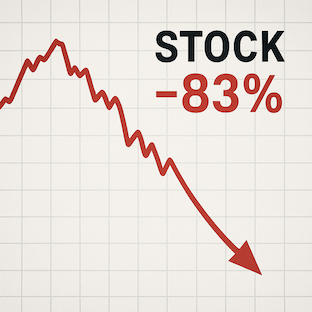
PagerDuty’s 83% Stock Drop Since 2019 and What We Learned from It in 2026
There’s nothing like a good old fashioned budget review to remind you what you’re actually spending money on… and how much of it.
-
Integrations Peer Rahne
GitLab + All Quiet: Incidents, Work Items, and the Right Sync Direction
Create GitLab work items from All Quiet incidents, or let GitLab work items open incidents in All Quiet. Pick the setup that matches how your teams run response and follow-up.
Read all blog posts and learn about what's happening at All Quiet.
Published