

Outbound webhooks: look up incident attributes by name in templates
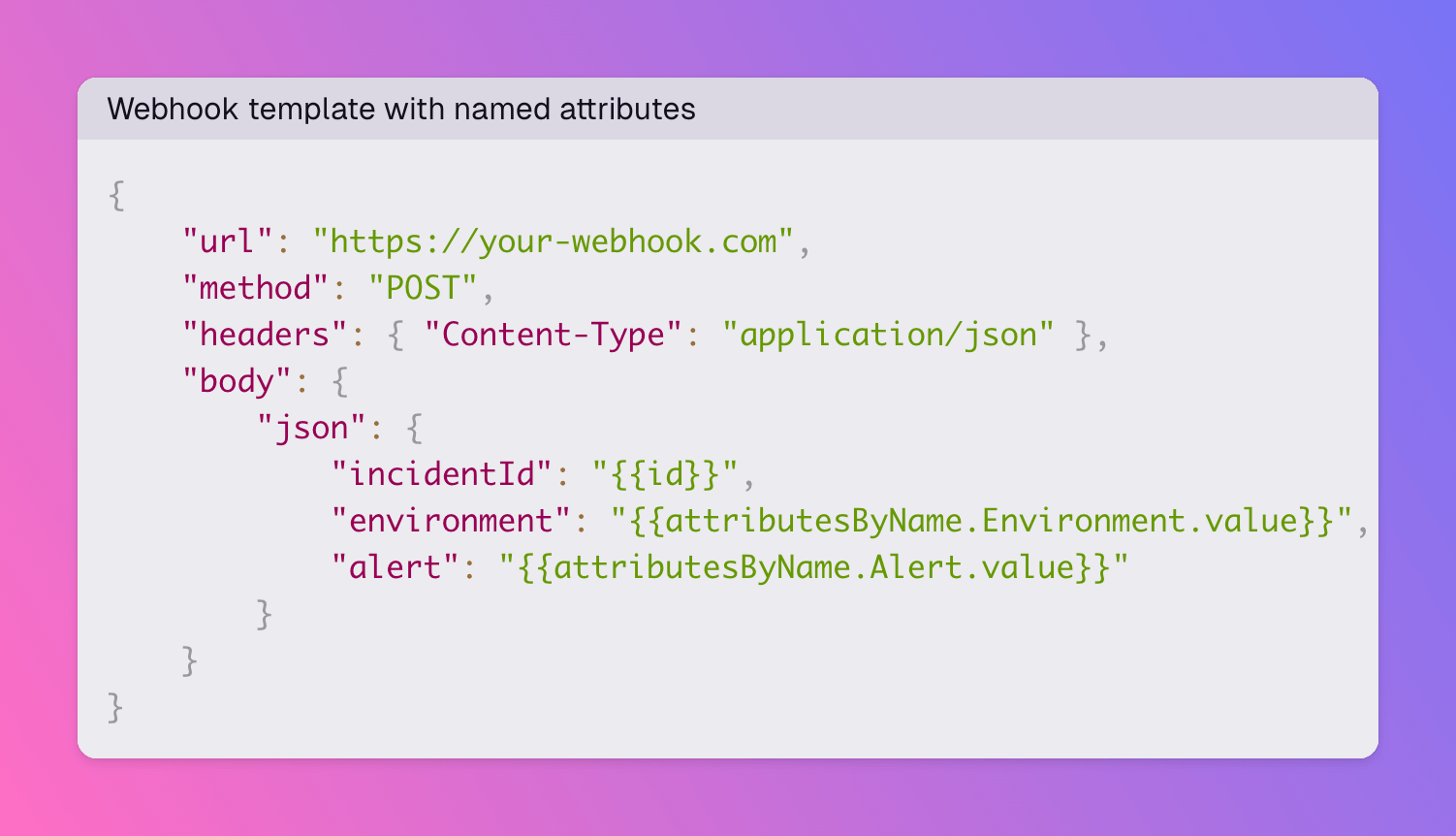
Outbound webhook Handlebars templates now expose attributesByName on the incident model. Reference a specific attribute by name instead of relying on its position in the attributes array.
Published: Monday, 22 June 2026
Outbound webhook Handlebars templates now expose attributesByName on the incident model. You can reference a specific attribute by name (for example {{attributesByName.ENV.value}}) instead of relying on its position in the attributes array.
The existing attributes list is unchanged and still works for iterating over all attributes. When you load an incident for testing, the JSON preview includes both attributes and attributesByName.
More updates
-
Inbound webhooks: IP filter and bearer authentication
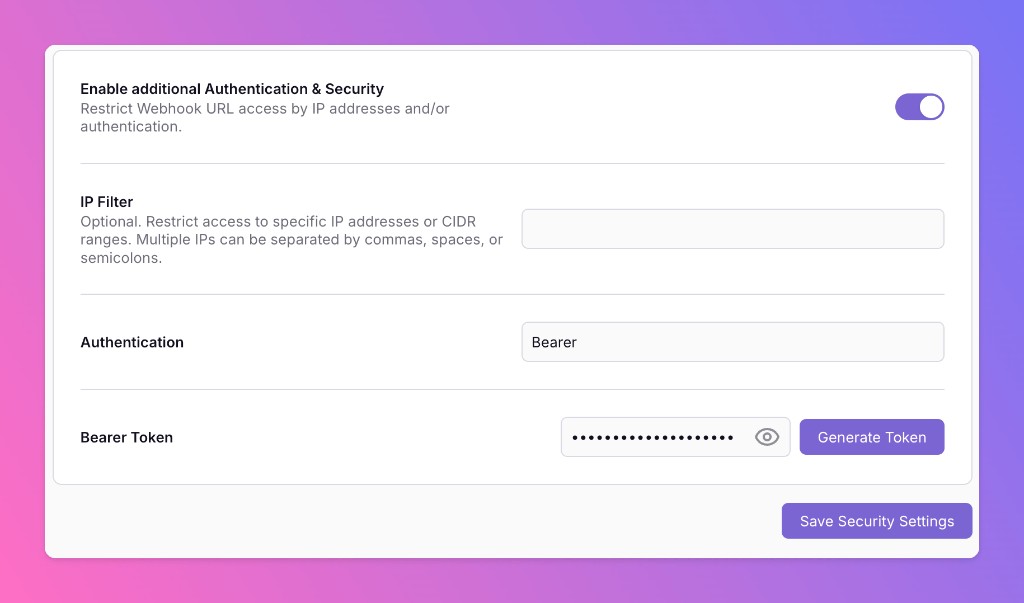
Webhook-based inbound integrations can now restrict who can POST to your URL. Optionally enable IP filtering, bearer token authentication, or both — so only your monitoring tools can open incidents.
-
Status Pages: Public Incident History
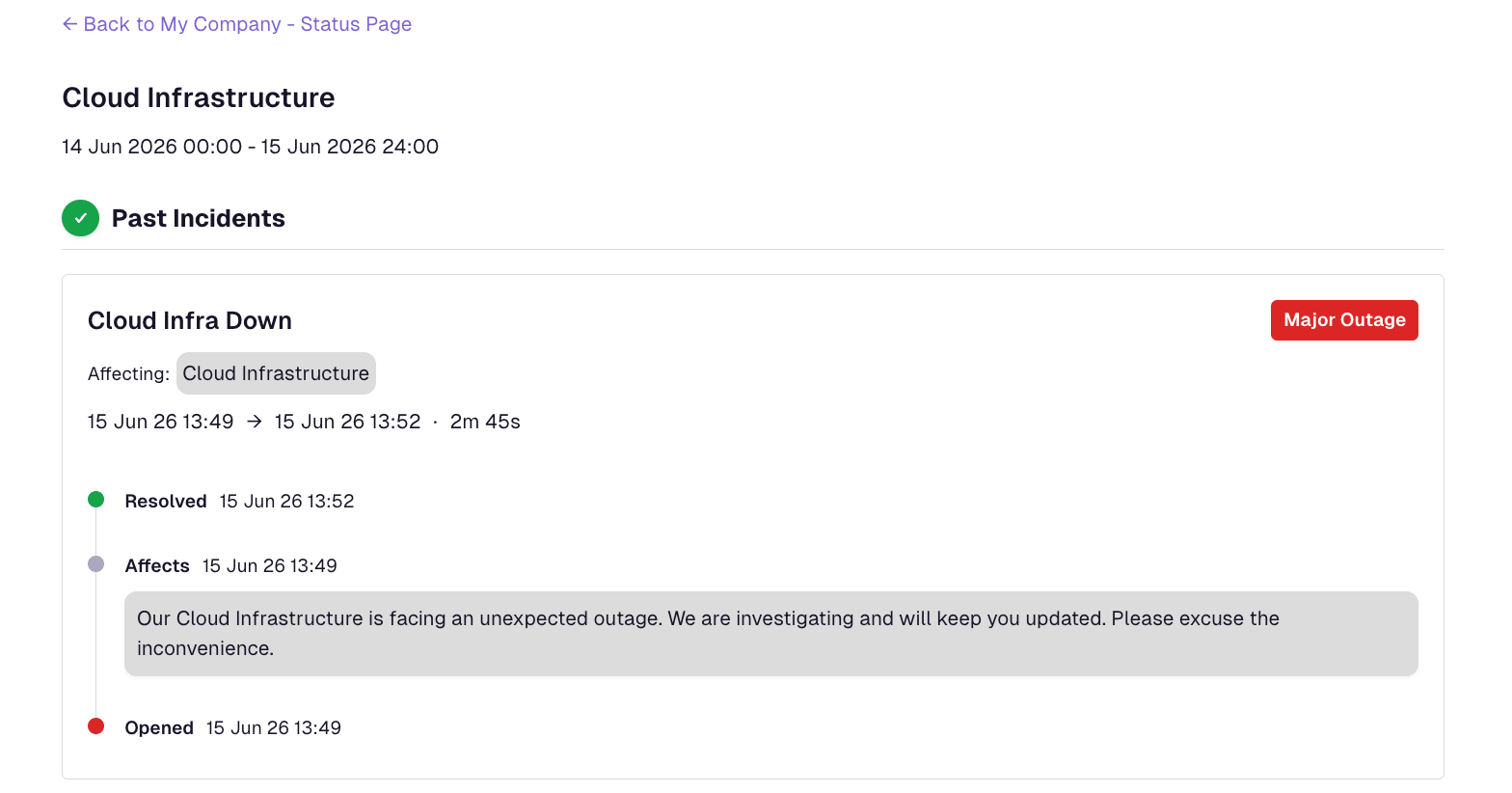
Past incidents and past maintenances no longer appear on the main Status Page. Visitors now open incident history pages by clicking a time interval on a Service's status graph.
Published