


Blog Authors
Nikolas Köppl
Go-to-market at All Quiet
Nikolas Köppl leads go-to-market at All Quiet. He has spent years building revenue and customer programs in scale-ups, with a focus on practical adoption of incident management and status communication. He writes engineering perspective pieces on culture, operations, and how organizations respond when production breaks.
Articles
-

New Product Guides & Tutorials Nikolas Köppl
Multi-Channel Incident Alerting: How to Escalate From Push to SMS to a Phone Call
The channel order that wakes the right person at 3 a.m.: push, SMS after 5 minutes, a phone call after 10. With a worked timeline, quiet hours and failover.
-

New Product Guides & Tutorials Nikolas Köppl
Escalation Policy Examples: 6 On-Call Setups You Can Copy
Six on-call escalation policy examples with step, who, channel and wait time, from a 3-person team to follow-the-sun. Set up in a UI, no scripting.
-

New Product Guides & Tutorials Nikolas Köppl
Incident Roles: Commander, Scribe & Comms Lead
The core incident roles explained: what the incident commander, scribe, comms lead and SMEs each do, and how to staff them from 15 to 100 engineers.
-

New Product Guides & Tutorials Nikolas Köppl
Post-Incident Review Template: Blameless PIR & Examples
A free, blameless post-incident review template with a fully worked example: timeline, impact, root cause, action items and owners. Copy it or download it.
-

Product Guides & Tutorials Nikolas Köppl
How to Reduce Alert Fatigue: The Permission Problem
Everyone knows which alerts to delete. Nobody deletes them, because removal is punished and keeping them is free. How to make alert removal safe, reversible and routine.
-

Product Guides & Tutorials Nikolas Köppl
Slack Incident Management: What Works and What Breaks
What Slack does better than dedicated tooling, where it breaks as the team grows, a workflow you can set up this afternoon, and the signals that mean it is time to add a pager.
-

Product Guides & Tutorials Nikolas Köppl
On-Call Rotation Guide: Schedules, Handoffs & Templates
Coverage math, daily vs weekly vs follow-the-sun, primary and secondary examples, a 2-minute handoff checklist, copy-paste schedule templates, and five numbers to tell whether the rotation is working.
-

Product Guides & Tutorials Nikolas Köppl
How to Reduce MTTR: The Coordination Framework
Most of an incident's elapsed time is detection, paging, and deciding, not typing. A coordination framework you can run this quarter, plus where tooling actually helps.
-

Product Guides & Tutorials Nikolas Köppl
Incident Severity Levels (SEV0-SEV4): Matrix, Examples & Free Template
SEV0 to SEV4 defined with a severity matrix, real examples, response targets, why most teams only need Critical / Warning / Minor, and a free copy-paste template.
-

Perspectives Nikolas Köppl
PagerDuty Pricing Explained (2026): Professional, the Reliability Platform, Events and Credits
What PagerDuty costs after the October 2026 change: Professional at $21 per user, the new Reliability Platform from $2,800 per year, how seats and events are counted, and worked totals for 10, 20 and 50 users.
-
Status Pages Nikolas Köppl
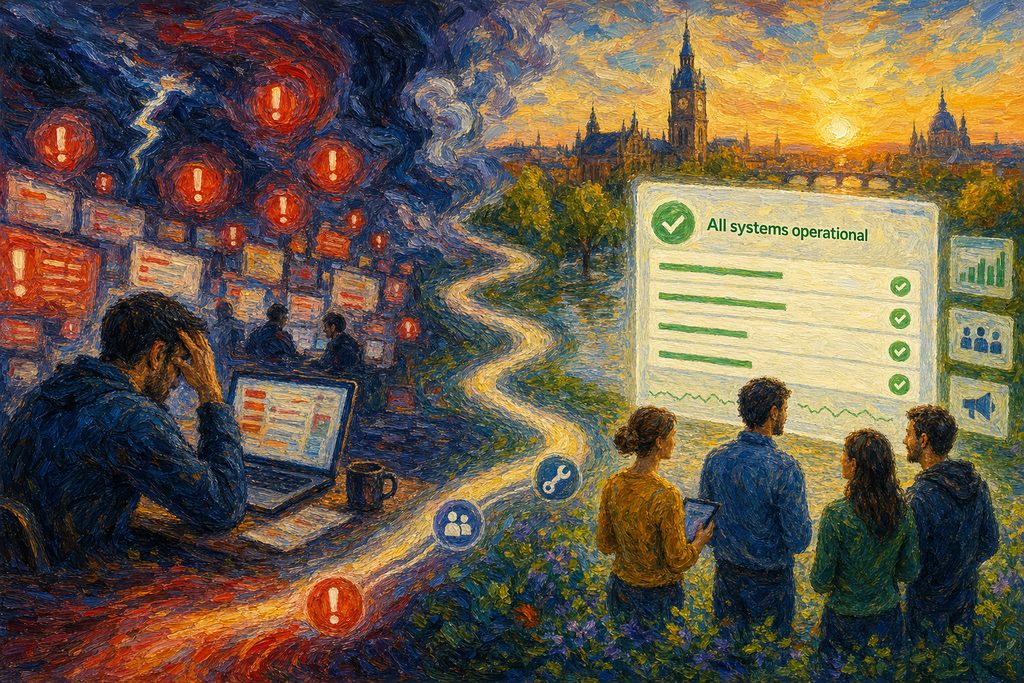
Best Status Page Service for Engineering Teams in 2026
Most status page comparisons miss the point. Engineering teams need status pages wired into incident workflows—not standalone tools you update manually during a firefight.
-
Perspectives Nikolas Köppl
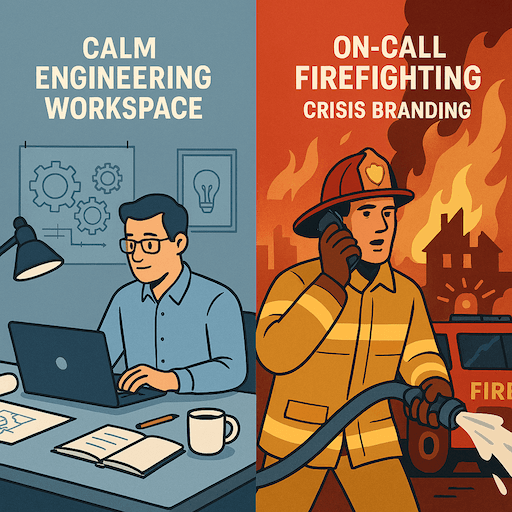
Why Is the On-Call Industry So Obsessed with Fire?
The phone rings at 3:14 AM. It's a flapping CPU alert, not a meltdown. Why does on-call tooling glorify fire, duty, and incidents instead of prevention and quiet?
-

Product Guides & Tutorials Nikolas Köppl
Infrastructure as Code (IaC) is Not an Add-On
When rotations drift and no one remembers who changed what, the pager still works but trust erodes. Incident management belongs in Git, reviewed and applied like the rest of your infrastructure.
-

Opsgenie Migration Nikolas Köppl
Migrating from Opsgenie to All Quiet: A Full Terraform-First Guide for 2026
If your Opsgenie config already lives in Terraform, you can migrate methodically instead of clicking two consoles side by side. This guide translates users, teams, integrations, on-call schedules, escalations, and routing into All Quiet - complete with example HCL, migration checklist, and tips for running both tools in parallel before you switch.
-

Grafana IRM Nikolas Köppl
The Migration Playbook: Grafana IRM to All Quiet
You might have moved to Grafana Cloud because the clock ran out on your self-hosted setup, but there is another way.
-

Grafana IRM Nikolas Köppl
Grafana OnCall OSS Sunsetting: Looking Beyond the 'Official' Migration Path
When an open-source project like Grafana OnCall OSS sunsets, most companies reflexively move to the "official" cloud version.
-

Grafana IRM Nikolas Köppl
Beyond Basic Schedules: Enterprise Grade Scalability with bootstrapped Total Cost of Ownership
🌍 Learn how All Quiet supports follow-the-sun schedules, attribute-based routing, and automated workflows so SRE teams get enterprise-grade reliability without enterprise bloat.
-

Grafana IRM Nikolas Köppl
Migrating from Grafana OSS to All Quiet: Reducing your IaC maintenance efforts for better long-term health
📉 Learn how migrating from Grafana OSS to All Quiet’s Terraform provider reduces your IaC maintenance overhead by consolidating escalation resources into simpler, hierarchical tiers.
-

Grafana IRM Nikolas Köppl
Grafana OnCall OSS is Sunsetting: Your Complete Migration Checklist
Grafana OnCall OSS is entering archive mode. Here’s the complete checklist to migrate without breaking your incident response.
-

Opsgenie Migration Nikolas Köppl
Migrating from Opsgenie to All Quiet: The Terraform (IaC) Transformation Guide - Part II
Consolidate Heartbeats, Cron Jobs, and Webhooks into a single resource type. Reduce integration code by up to 60% while gaining deeper control over payload data.
-

Opsgenie Migration Nikolas Köppl
The SRE's Guide to Opsgenie Migration: All Quiet vs. ITSM Bloat
For 50 engineers, JSM Premium costs about 217% of the Opsgenie price. All Quiet saves you over $20,000/year with SRE-focused technical parity.
-

Opsgenie Migration Nikolas Köppl
Migrating from Opsgenie to All Quiet: The Terraform (IaC) Transformation Guide - Part I
🔧 A technical guide for DevOps and SRE teams: Learn how to migrate from Opsgenie to All Quiet using Terraform, transforming legacy ticketing-heavy structures into modern, developer-first IaC workflows.
-

Customer Case Studies Nikolas Köppl
Customer Case Study: Wikiloc at All Quiet
Wikiloc Centralizes Alerting and Finds a Developer-First Partner for Sustainable Growth
-

Customer Case Studies Nikolas Köppl
Customer Case Study: Uberspace at All Quiet
How Uberspace cut alerting costs by 50% and removed unnecessary complexity by switching to All Quiet.
-

Customer Case Studies Nikolas Köppl
Customer Case Study: LoudCrowd at All Quiet
How LoudCrowd’s Engineering Team Streamlined On-Call and Achieved SOC 2 Compliance with All Quiet.
-

Opsgenie Migration Nikolas Köppl
Migrating from Opsgenie to All Quiet
🧭 From Alert Overload to Clarity: Why All Quiet Is the natural next step After Opsgenie.
-

Perspectives Nikolas Köppl
Getting Started with Incident Management as a Small Team
👩👧👦 When you’re a small team, incident management processes often end up as an afterthought. But even early on, how you respond to incidents matters more than you might think.
-

Perspectives Nikolas Köppl
How All Quiet Helps Remote Teams Handle Incidents During Work and After Hours
🧑💻 Handling incidents is one of the trickiest parts of working in a remote setup. Teams often span multiple time zones, rely on different tools, and deal with notifications competing for attention during critical moments.
-

Perspectives Nikolas Köppl
Why Incident Management is Essential For a Successful 'Fail-Forward' Strategy
👨🚒 Failure in software development is a given. What separates the best teams from the rest is not avoiding failure altogether — it’s how they handle it when it happens.
-

Perspectives Nikolas Köppl
Incident Management is a Time Thief Unless You got the Right Tools
⏱️ In tech, effective incident management is crucial to ensure business continuity and minimize downtime. However, without the proper tools, this process can become a significant time thief, draining valuable resources and impacting overall productivity. Here's why:
-

Perspectives Nikolas Köppl
Why Alerting Tools Reduce Stress for Stakeholders
🧘 Incident Management tools seem counterintuitive for reducing stress. After all, as a tech lead, getting a wake-up call at 2 a.m. because your server is down doesn't exactly improve your wellness in the first place.
-

Perspectives Nikolas Köppl
Incident Escalation Unveiled: Tales from the Trenches and the Power of All Quiet
Discover how All Quiet's cutting-edge incident management platform revolutionizes the resolution process. Gain insights into streamlined communication and automated escalation policies.
-

Perspectives Nikolas Köppl
Productive teams stay calm; stressed teams struggle
😌 Why calm software engineering teams are more productive than stressed teams and how dedicated communication channels can help to foster this calmness.
Browse all posts on the All Quiet blog.