

Engineering Perspectives on Incident Management
This category shares viewpoint articles on engineering culture, operational strategy, and team design, with practical ideas for building calmer and more effective incident response organizations.
Last updated: Tuesday, October 13, 2026

-

Perspectives Maximilian Beller
What an Agent Can Do
Agents are becoming the way people operate software, so what an agent is permitted to do is now the interface. Why we rebuilt API keys around that idea, and how we tested it.
-

Perspectives Christine Feeney
The 5 Best PagerDuty Alternatives for Small Teams in 2026
Five PagerDuty alternatives for a 10-person team — compared on starting price, alerting channels, bundled features, and how hard it is to leave PD.
-

Perspectives Christine Feeney
The 5 Best Live Call Routing Software Solutions 2026
Five live call routing tools that connect inbound hotlines to the engineer who's actually on rotation — compared on schedule awareness, number provisioning, escalation, pricing, and mobile UX.
-

Perspectives Christine Feeney
The 5 Best On-Call Management Software Tools in 2026
Five on-call tools that actually make rotations manageable in 2026 — compared on scheduling, escalations, alert channels, integrations, pricing, and mobile UX.
-

Perspectives Nikolas Köppl
PagerDuty Pricing Explained (2026): Professional, the Reliability Platform, Events and Credits
What PagerDuty costs after the October 2026 change: Professional at $21 per user, the new Reliability Platform from $2,800 per year, how seats and events are counted, and worked totals for 10, 20 and 50 users.
-

Perspectives Christine Feeney
How PagerDuty Quietly Pushes Startups into Higher Price Tiers and Why it Feels Like an Enterprise Tax
Most startups start on PagerDuty's cheapest tier—until the renewal quote arrives and the numbers don't match the narrative. Here's why feature gates feel like an enterprise tax, and what transparent pricing looks like instead.
-
Perspectives Christine Feeney
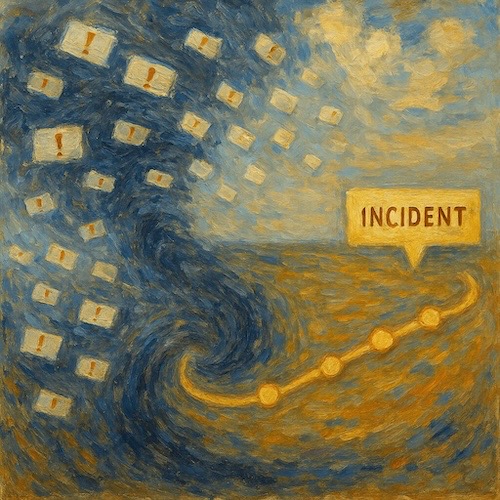
How Alert Routing & Grouping Power Lean Incident Management Platforms
One database blip, thousands of identical alerts. Learn how deduplication keys and alert grouping turn alert storms into one actionable incident—and how All Quiet stays quiet until something truly new happens.
-

Perspectives Christine Feeney
How to Set Up Follow-the-Sun On-Call
Spread on-call across APAC, EMEA, and AMER so no one works nights. This guide covers time-zone handoffs, DST traps, and automated rotations that keep coverage humane.
-

Perspectives Christine Feeney
Understanding the Incident Management Software & On-Call Lifecycle
On-call, incident response, and incident management are three different stages of the reliability lifecycle. This guide maps the SRE Trinity from first alert to long-term improvement.
-
Perspectives Nikolas Köppl
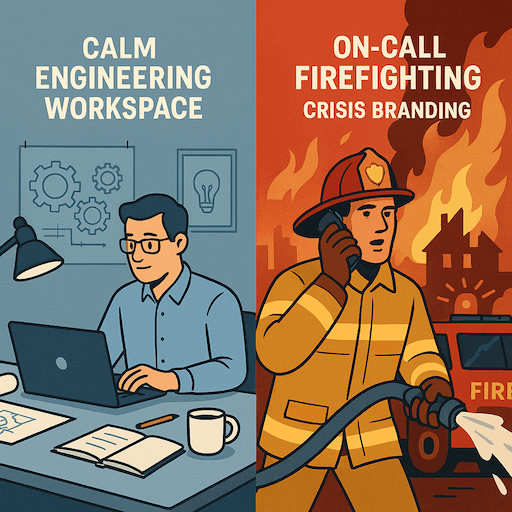
Why Is the On-Call Industry So Obsessed with Fire?
The phone rings at 3:14 AM. It's a flapping CPU alert, not a meltdown. Why does on-call tooling glorify fire, duty, and incidents instead of prevention and quiet?
-

Perspectives Peer Rahne
Why We Built Live Call Routing the Lean Way
When email is not enough, you need a human on the phone. Live Call Routing should not require a sales cycle or telephony markup. Here is how All Quiet built it the lean way.
-

Perspectives Christine Feeney
Top 6 PagerDuty Alternatives 2026
PagerDuty renewals stinging? Compare All Quiet, incident.io, Rootly, Better Stack, Grafana IRM, and FireHydrant on pricing, IaC, noise reduction, Slack workflows, and who each tool is really for in 2026.
-

Perspectives Christine Feeney
On-Call is the daily business; Incident Management is a Philosophy
If your on-call strategy is just "make it louder," you need a system, not a shinier pager. On-call is the who; incident management is the how.
-
Perspectives Christine Feeney
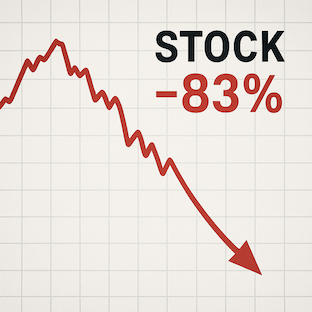
PagerDuty’s 83% Stock Drop Since 2019 and What We Learned from It in 2026
There’s nothing like a good old fashioned budget review to remind you what you’re actually spending money on… and how much of it.
-

Perspectives Peer Rahne
SaaS is dead, long live SaaS: While vibe-coding does favor build over buy for some products, it won't replace mission-critical tools in the foreseeable future
Here’s my take on what gets killed, what survives, and the build-vs-buy rule that actually works.
-

Perspectives Nikolas Köppl
Getting Started with Incident Management as a Small Team
👩👧👦 When you’re a small team, incident management processes often end up as an afterthought. But even early on, how you respond to incidents matters more than you might think.
-

Perspectives Nikolas Köppl
How All Quiet Helps Remote Teams Handle Incidents During Work and After Hours
🧑💻 Handling incidents is one of the trickiest parts of working in a remote setup. Teams often span multiple time zones, rely on different tools, and deal with notifications competing for attention during critical moments.
-

Perspectives Nikolas Köppl
Why Incident Management is Essential For a Successful 'Fail-Forward' Strategy
👨🚒 Failure in software development is a given. What separates the best teams from the rest is not avoiding failure altogether — it’s how they handle it when it happens.
-

Perspectives Peer Rahne
Why Developer Experience Matters
😬 You know the drill - everyone wants great software. Fast, reliable, and smooth, right?
-

Perspectives Peer Rahne
Why On-Call Keeps Your Business Going
🤷♂️ Let's be real: Nobody wants to be on-call.
-

Perspectives Peer Rahne
How to Maximize Your ROI with Incident Management Tools
💸 The cost of one hour downtime averages between a mind-blowing $100k-$250k. WHAT?!
-

Perspectives Peer Rahne
The Advantages of Bootstrapping: How All Quiet Offers Unbeatable Value-For-Money Incident Management
🥾 In Germany, we like to say: “Kaufst du billig, kaufst du zweimal”, which basically translates to something like “If you buy cheap, you buy twice.” But is this necessarily true? Is it always quality vs. affordability?
-

Perspectives Nikolas Köppl
Incident Management is a Time Thief Unless You got the Right Tools
⏱️ In tech, effective incident management is crucial to ensure business continuity and minimize downtime. However, without the proper tools, this process can become a significant time thief, draining valuable resources and impacting overall productivity. Here's why:
-

Perspectives Nikolas Köppl
Why Alerting Tools Reduce Stress for Stakeholders
🧘 Incident Management tools seem counterintuitive for reducing stress. After all, as a tech lead, getting a wake-up call at 2 a.m. because your server is down doesn't exactly improve your wellness in the first place.
-

Perspectives Nikolas Köppl
Incident Escalation Unveiled: Tales from the Trenches and the Power of All Quiet
Discover how All Quiet's cutting-edge incident management platform revolutionizes the resolution process. Gain insights into streamlined communication and automated escalation policies.
-

Perspectives Nikolas Köppl
Productive teams stay calm; stressed teams struggle
😌 Why calm software engineering teams are more productive than stressed teams and how dedicated communication channels can help to foster this calmness.
-

Perspectives Maximilian Beller
Why we created a new incident escalation platform
👋 Hi, I am Max, and I'd like to share with you what motivated me to create All Quiet, a new platform for software engineering teams to collaborate on incidents.
Turn on-call playbooks into live incident workflows
All Quiet is where SRE and DevOps teams run what this blog teaches: on-call scheduling, intelligent alert routing to phone, push, and chat, automated escalations when alerts go unacknowledged, and status communication during production incidents. We excel at cutting alert fatigue without missing real outages and keeping incident response calm when systems are not. Start a free 14-day trial and run on-call on a platform built for production reliability.